
Skiing in Europe vs. USA: The Major Differences You Need to Know
Later in this post I share a few affiliate links. I may earn a commission if you click on them and make a purchase, at no cost to you. I really appreciate your support!
When I first started skiing, I assumed that it was the same everywhere.
After all, the slopes look the same, the equipment is identical, and the sport of downhill, Alpine skiing is what it is, no matter where you do it.
RIGHT?
Well, not exactly.
After skiing in Europe for more than five years, I’ve learned that the biggest differences are in culture, cuisine, and cost.
Plus, the pistes aren’t as similar as they appear, and the way certain skiers interact with the terrain can be entirely different.
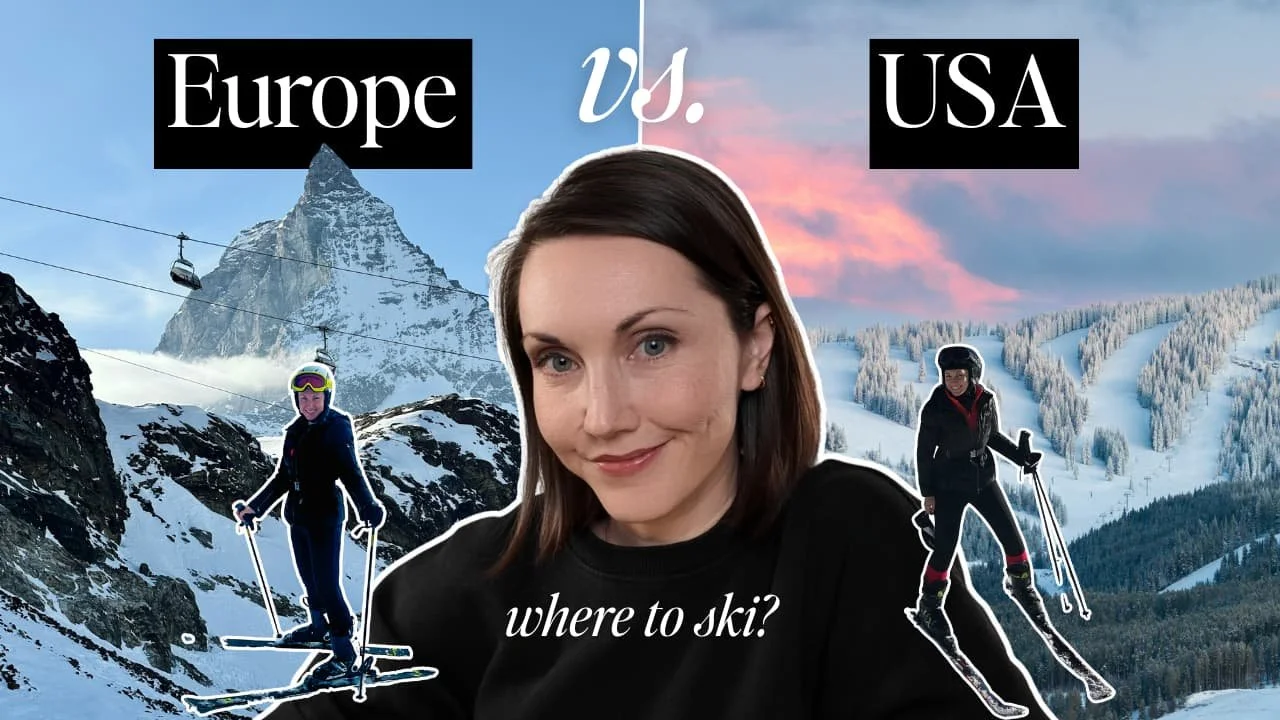
BELOW, I’M EXPLAINING THE DIFFERENCES BETWEEN SKIING IN EUROPE VERSUS SKIING IN THE UNITED STATES.
If you’re planning a ski trip to Europe, be sure to understand these distinctions before you hit the slopes.
WATCH THIS POST
Key Differences Between Skiing in Europe and the United States
Skiing is Cheaper in Europe
The overall price of a ski trip can add up very quickly, and I’ve found that it’s a much smaller price tag in Europe.
The average cost to rent ski equipment in Europe, between 40 - 70 euros per day, is similar to the equipment rental cost in the U.S.
But that’s where the price parity ends.
THE COST OF SKI LIFT TICKETS IS MUCH CHEAPER IN EUROPE, OFTEN HALF THE PRICE OF THEIR U.S. EQUIVALENTS.
For those just learning to ski, the price of European ski school lessons or private lessons are also less than in the U.S.
Lodgings, which usually include breakfast, are also generally less expensive than in the U.S., as well.
And if you choose a resort that is accessible by train, you can even avoid the cost of a rental car.
Europe’s Ski Resorts are Larger
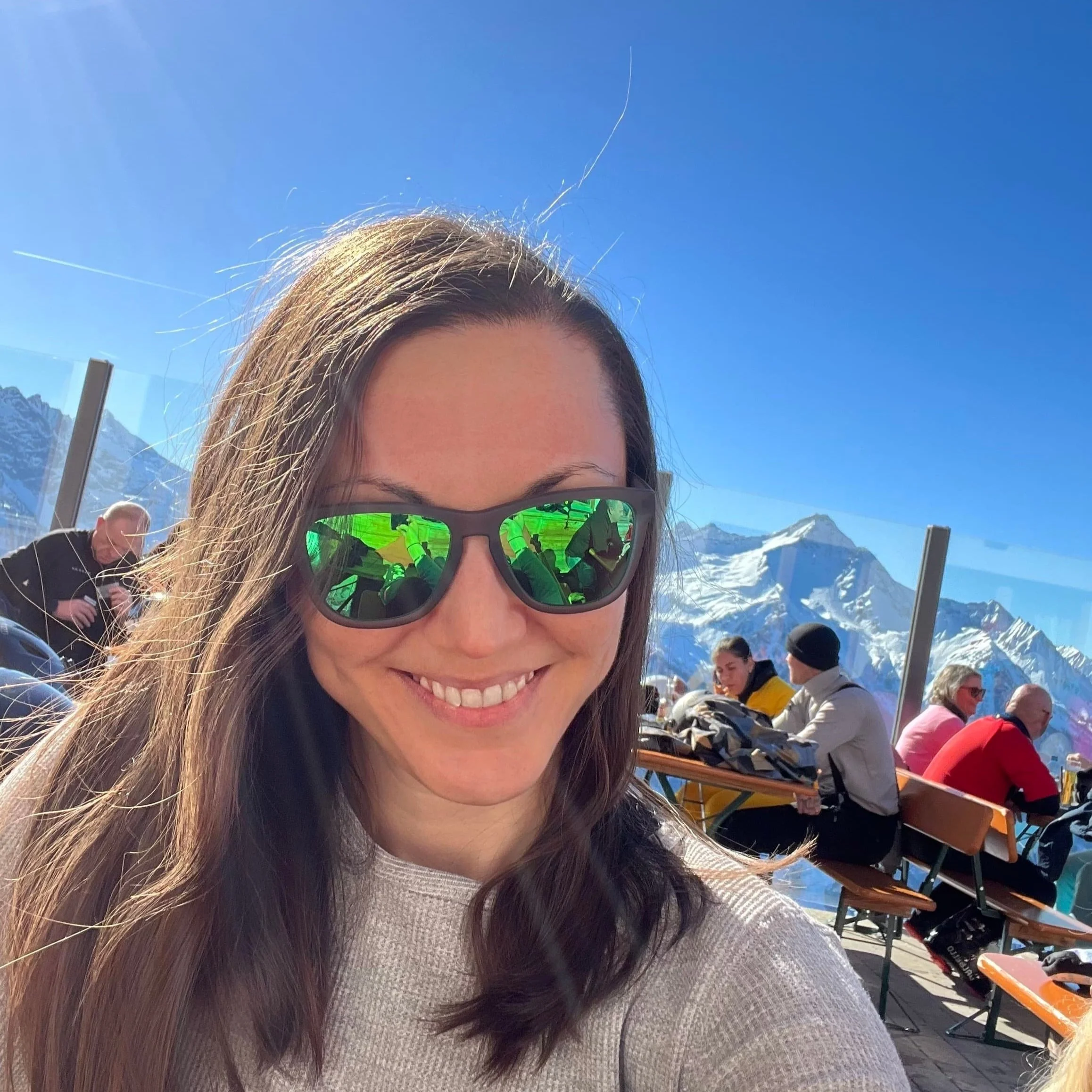
Everything’s usually bigger in the U.S. and more compact in Europe, but that logic is completely reversed when it comes to ski resort size.
Ski resorts in the U.S. are typically owned by individual corporations, which limits their overall size.
European resorts, on the other hand, are typically owned by local governments and regional co-ops, and are more incentivized to share infrastructure.
THIS LEADS TO LARGER, INTERCONNECTED RESORTS THAT ARE LINKED BY MODERN LIFT SYSTEMS.
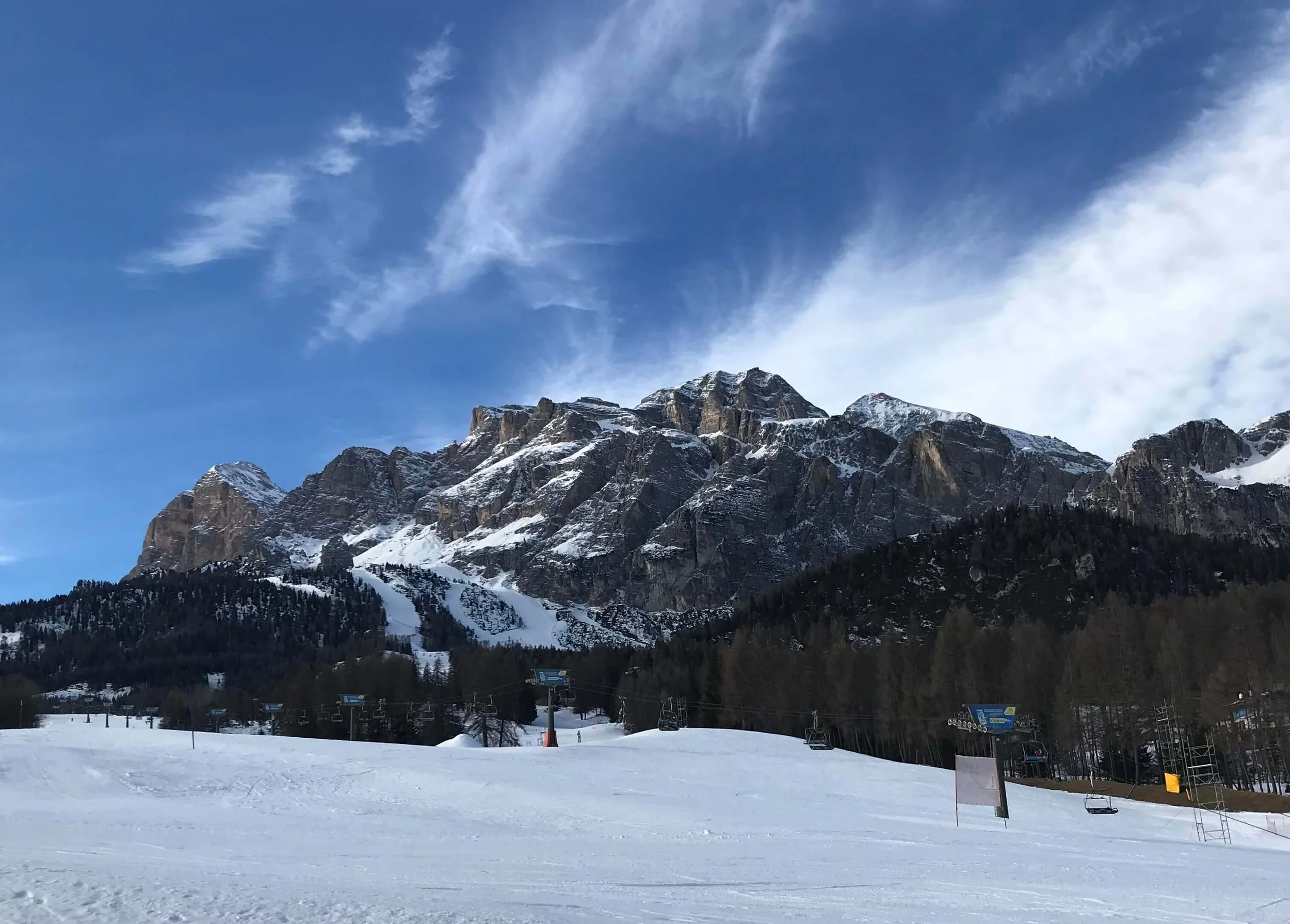
Because so much terrain is available on a single lift ticket, it’s common to ski from one town to another and back in a single day.
In border-adjacent resorts, this includes “cross-border skiing”, where you ski from one country into another.
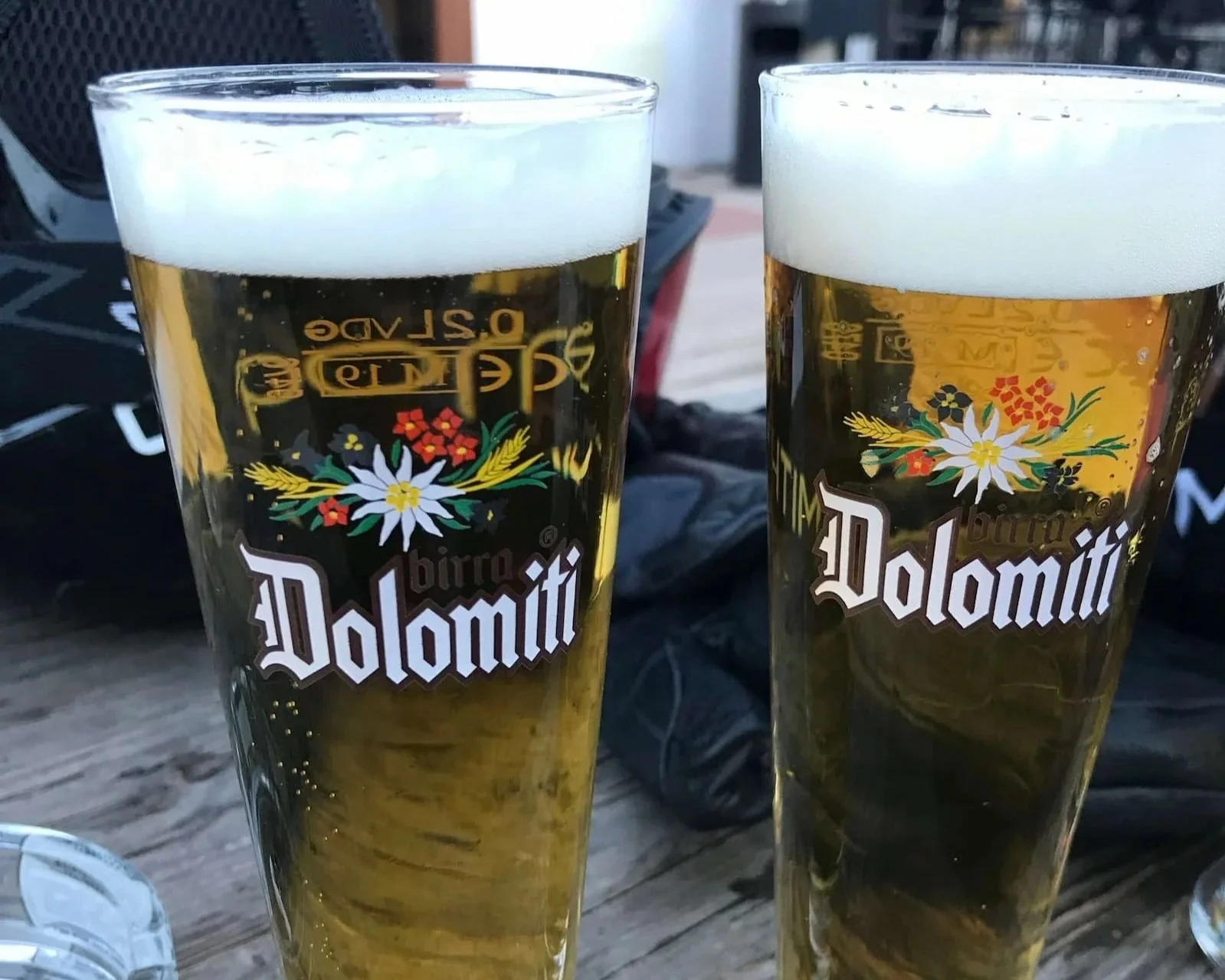
Ski Resort Dining is Better in Europe
I realize that “better” is a completely qualitative element and open to personal interpretation.
But I truly believe that the dining experience at European ski resorts is vastly superior to that at U.S. ski resorts.
IN AMERICA, SKI RESORTS TEND TO FOCUS ON CONVENIENCE AND FAST FOOD.
European resorts, on the other hand, offer more gourmet dining experiences that emphasize local culinary traditions.
In fact, it’s not uncommon for us to dine at Michelin-starred restaurants for slope-side lunches while skiing in Europe. 😋

Piste Ratings are Slightly Different
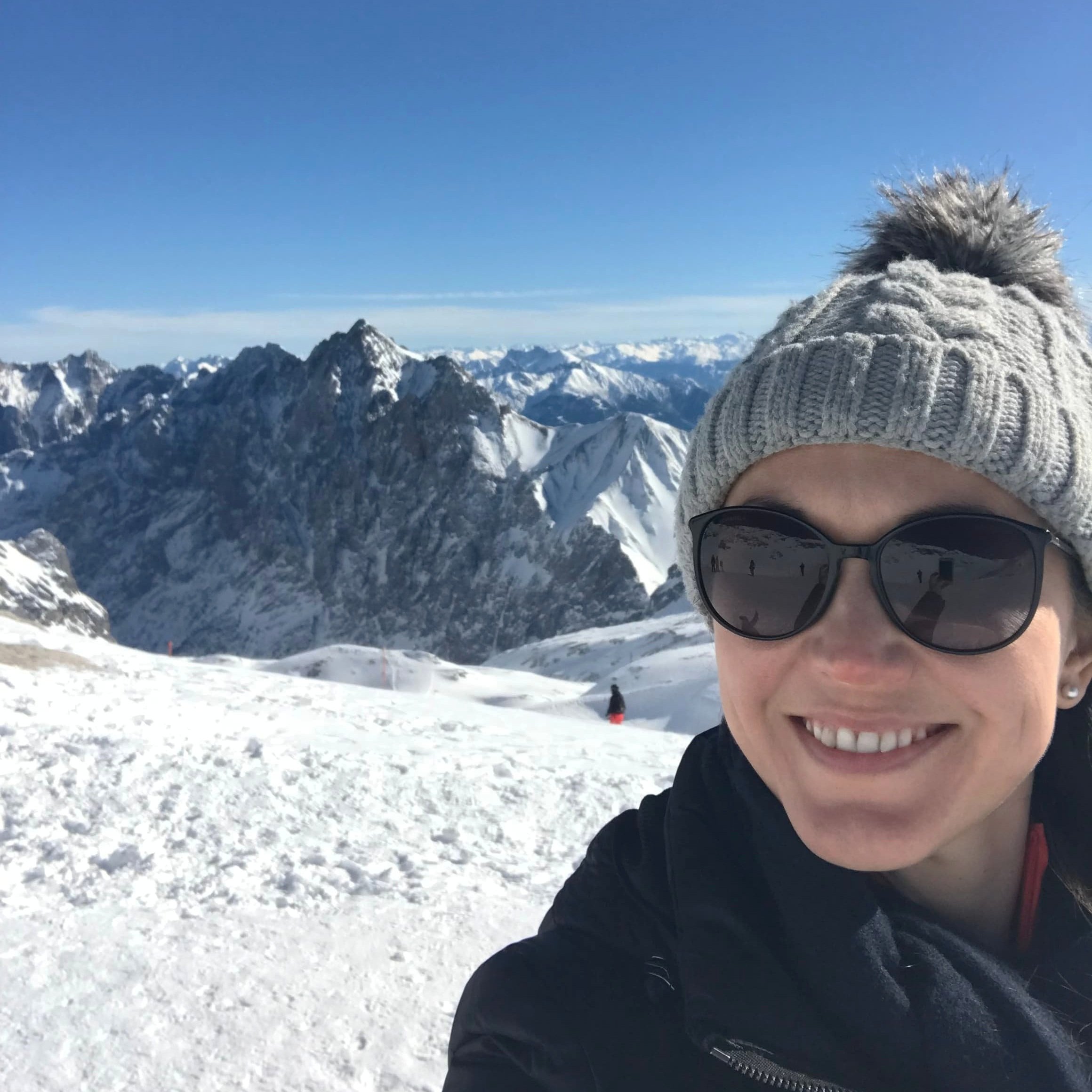
In the U.S., you’ll see a green circle for beginner slopes, a blue square for intermediate ones, and a black diamond for the most advanced runs.
THAT RATING SYSTEM IS IMPORTANT AS IT TELLS SKIERS WHAT TYPE OF SKILLS WILL BE REQUIRED TO MAKE IT DOWN THE MOUNTAIN.
Beginners are likely to still be learning how to stop and turn, but intermediate skiers should be comfortable making parallel turns and able to control their speed.
And advanced skiers need to have the technical skills required to navigate moguls, steep grades, and the occasional hazard.
EUROPEAN SKI RESORTS USE A SLIGHTLY DIFFERENT PISTE RATING SYSTEM, THOUGH.
Green is only used regionally, and it indicates slopes for absolute beginners and children.
The more common designation for beginner pistes is blue.
Intermediate runs are marked in red, and advanced ones are marked by black signage.
Off-Piste is Riskier in Europe
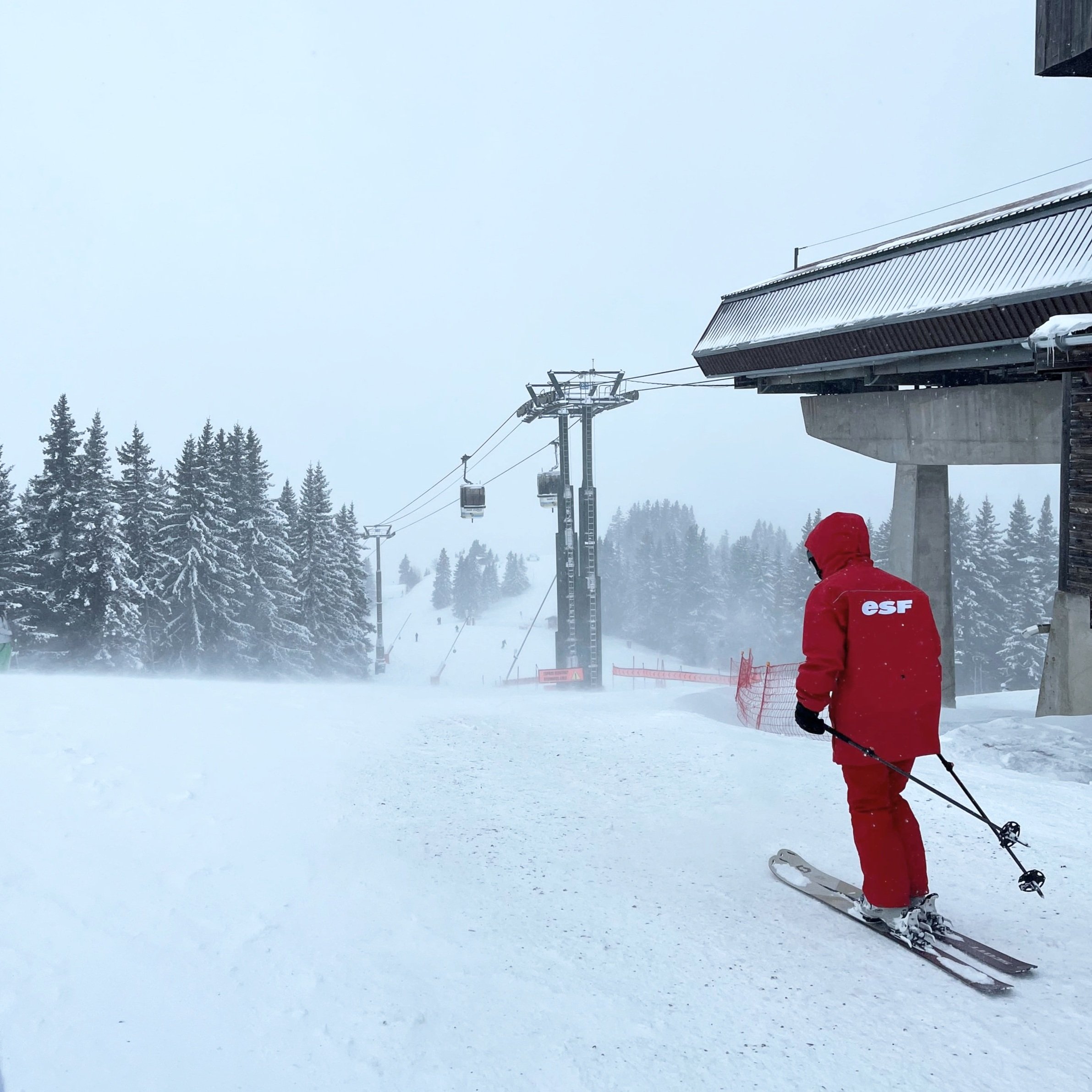
SKIERS WHO ENJOY OFF-PISTE SKIING IN THE U.S. NEED TO BE AWARE OF THE RISKS THAT ARE INVOLVED IN EUROPE.
For starters, the concept of “in-bounds off-piste,” or skiing on natural, ungroomed runs within a resort’s patrolled area, simply does not exist in Europe.
You’re legally allowed to ski off-piste in Europe, but you do so entirely at your own risk.
There is no avalanche control off-piste, and little to no signage warning of boundaries, glacier crevasses or cliffs.
If you really want to ski off-piste in Europe, be sure to hire an experienced guide, pack proper equipment, and buy the right adventure insurance.
Europe has More Cultural Variety
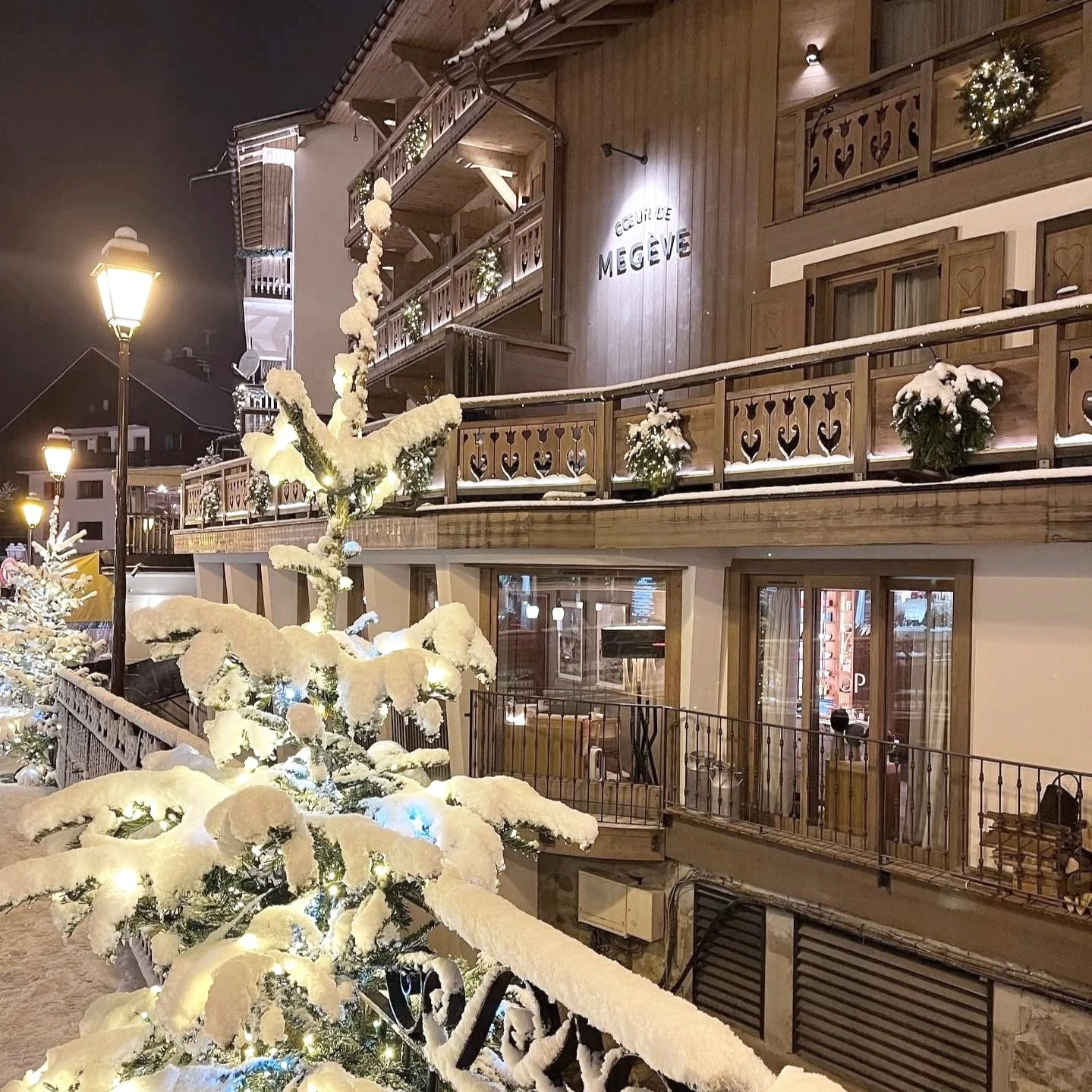
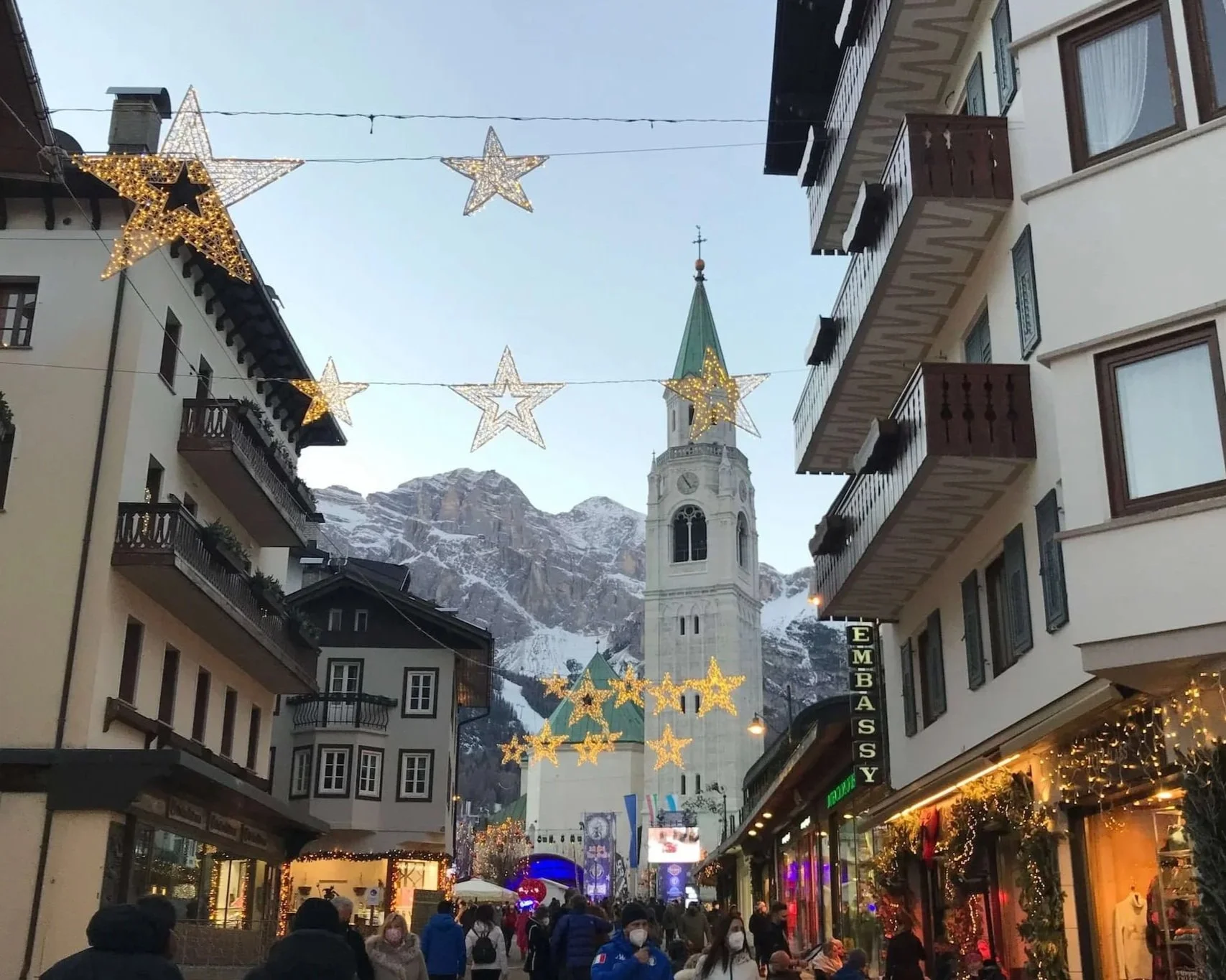
There is such a wide array of cultural and regional variety in Europe, and that certainly applies to the ski experience.
Things like après ski style, food and dining, and even lodgings will vary slightly between different countries.
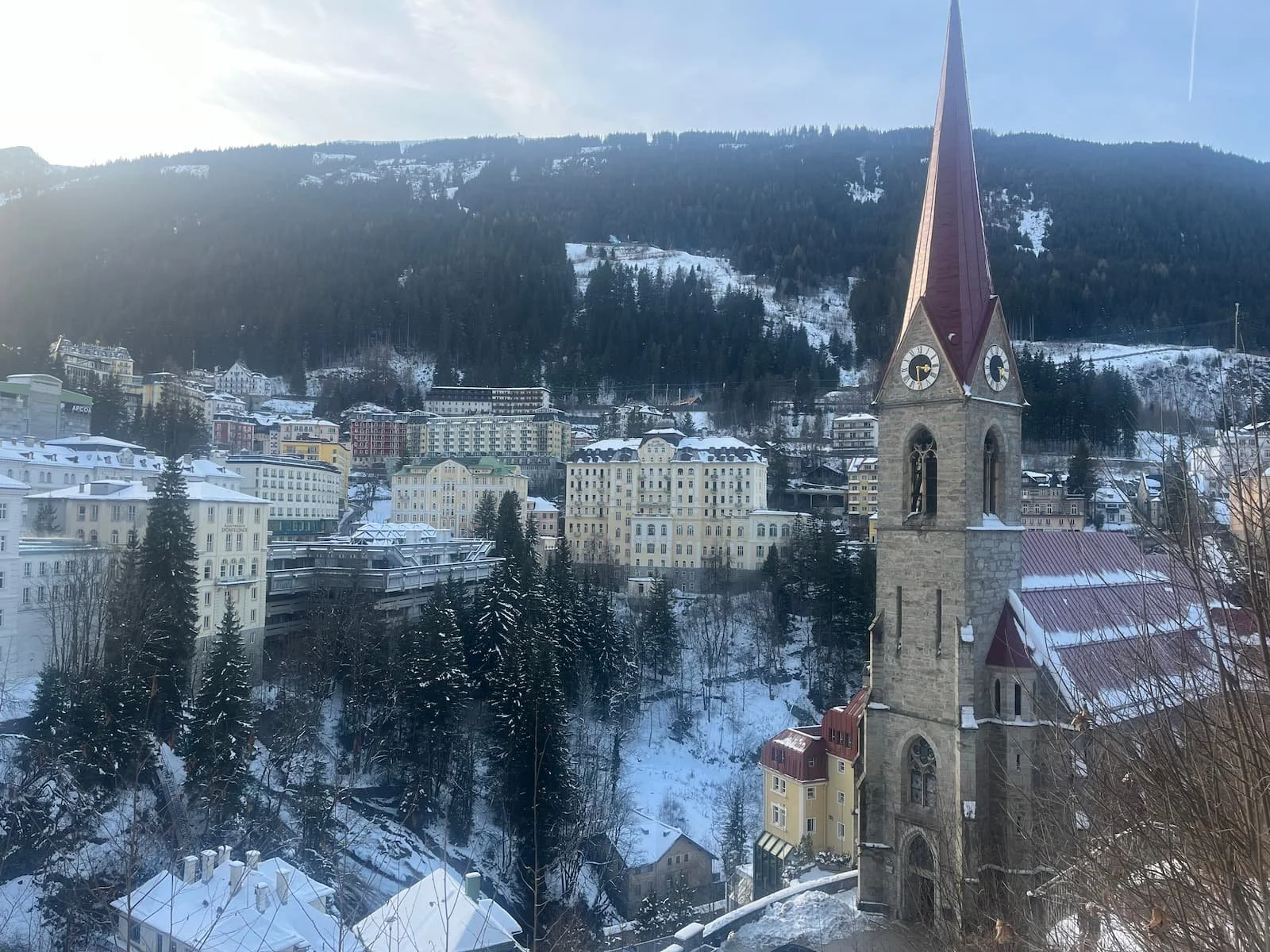
SKIING IN AUSTRIA IS VERY DIFFERENT FROM SKIING IN FRANCE.
These cultural differences are also what tend to get Americans hooked on skiing in Europe.
They hear stories in Megève about ski culture in Kitzbühel, for example, and decide to check out Austria on their next trip.
Best Time to Ski in Europe
PERSONALLY, MY FAVORITE TIME TO SKI IN EUROPE IS DURING THE MONTH OF JANUARY.
It’s a lull in the winter calendar – after the bustle of the holidays is over, but before high season truly kicks off in February.
Resorts are fully operational, but less crowded and more likely to be composed of local guests rather than international travelers.
THE OVERALL SKI SEASON IN EUROPE IS SIMILAR TO THAT OF MAJOR NORTH AMERICAN RESORTS.
Most resorts open in late November and close in mid to late April.
High season takes place over Christmas and New Year’s, as well as from February until the end of March.
RESORTS THAT ARE CLOSE TO GLACIERS BENEFIT FROM LATE SEASON SKIING, WELL INTO APRIL, AND SOMETIMES EVEN LATER!
I haven’t tried this out yet, but April skiing is high on my list for the upcoming season. 😎

Conclusion
SKIING IN EUROPE IS ONE OF MY FAVORITE WINTER PASTIMES.
There’s just something so magical about these mountain resorts, even if you don’t ski at all.
If this post convinced you to start planning a ski trip to Europe, then be sure to check out my free email course, How to Plan a Trip to Europe.
You’ll also love this post on my favorite ski resorts for beginners, or this one about what I like to pack for a ski trip.
And if video is more your thing, then be sure to check out my ski trip playlist over on Youtube!
Until next time,
Angela ⛷️
YOU’LL ALSO LOVE…