
Budgeting for a Trip to Europe: 9 Tips for Beginners
Later in this post I share a few affiliate links. I may earn a commission if you click on them and make a purchase, at no cost to you. I really appreciate your support!
If you’re in the early stage of planning a trip to Europe, then you’re likely thinking about how much everything will cost.
There are big ticket items like international airfare, accommodations, and intercity transport that will eat up most of your budget.
BUT YOU ALSO HAVE TO CONSIDER SMALL COSTS LIKE DINING, EXPERIENCES, AND SOUVENIRS.
Plus, inflation has been slowly spreading throughout the continent, making things more expensive than they were even a few years ago.
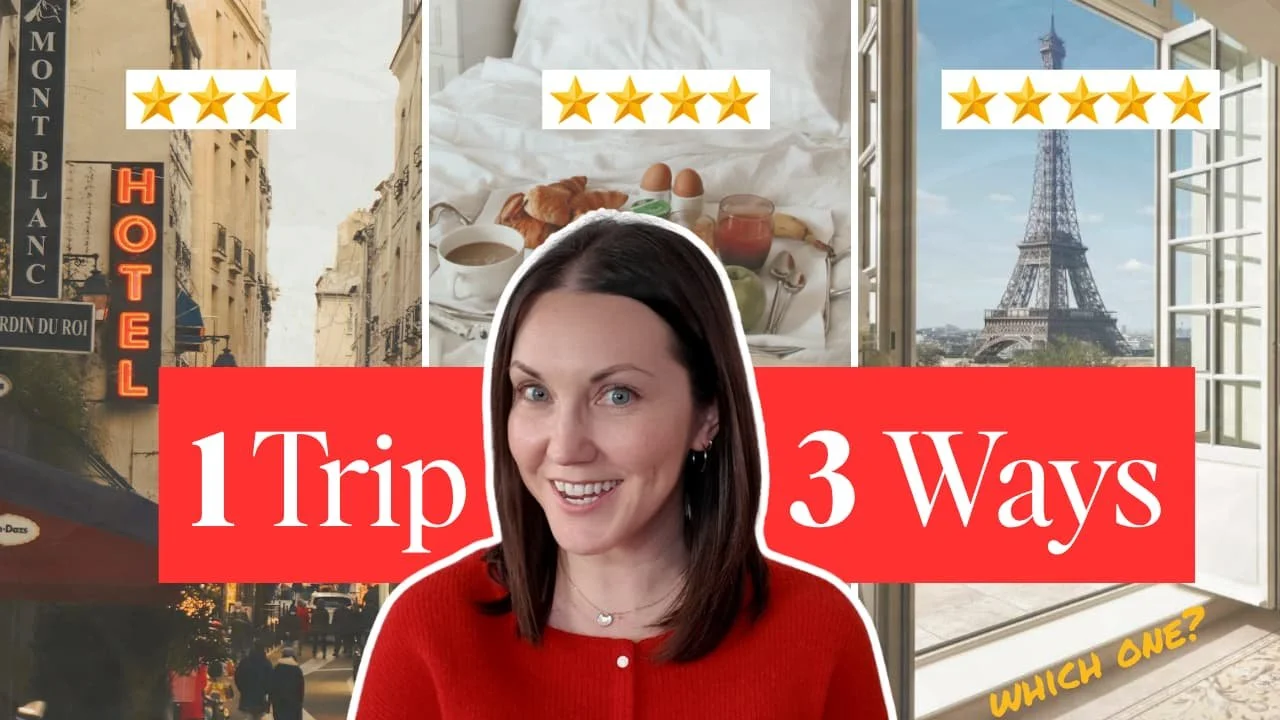
I have a separate blog post where I price out and compare three different European trips across three different budget categories.
Be sure to check that out if you get a chance.
BELOW, I’VE ROUNDED UP NINE TIPS ON BUDGETING FOR A TRIP TO EUROPE THAT TRAVELERS NEED TO KNOW.
Understanding these may be the difference between a trip you can afford and one that costs drastically more than you planned.
No. 1 - Choose Your Destination Wisely
Despite the single market and widespread use of the Euro, Europe has a wide variety of economic realities across its regions.
Switzerland and the Nordic countries, for example, are structurally more expensive destinations.
DINING OUT IN THESE MARKETS CAN EASILY EXCEED 25 USD PER PERSON – EVEN FOR FAST FOOD.
On the flip side, Eastern Europe or some parts of southern Europe are structurally less expensive destinations.
When choosing your destination, be sure to research how far a traveler's dollar will stretch.
No. 2 - Seasonality Decides What You Pay
The price of any good or service is rarely fixed, and this is equally true of airfare and accommodations.
The same flight or hotel room will have a different price depending on the time of year you are trying to book it, and whether or not it is high season or low.
IN EUROPE, THE GENERAL HIGH SEASON IS FROM LATE SPRING TO THE END OF SUMMER, FROM MAY TO SEPTEMBER.
There is also a second high season around the holidays, known as the festive season, from late November to early January.
But this is just a generalization.
In reality, every destination has its own unique high and low season, impacted by local festivals, events, and school holidays.
ALWAYS BE SURE TO CHECK THE HIGH AND LOW SEASON OF A POTENTIAL DESTINATION.
In high season, you’ll find higher prices compared to low season, when it is more likely that you can find last minute deals or specials.
💡 Another thing to keep in mind: the so-called shoulder seasons of spring and autumn are often referred to as the best time to visit Europe.
THE WEATHER IS MILD AND THE CROWDS HAVE NOT YET DESCENDED.
But as more and more travelers avoid the high season, these shoulder seasons are themselves starting to become more popular.
Just be aware of how this trend might impact prices.
No. 3 - When You Book Matters, Too
When you book a trip also has a strong impact on the prices you’ll pay.
TRAVELERS LOVE THE APPEAL OF A LAST-MINUTE TRIP – IT’S SPONTANEOUS AND EXCITING!
But last minute flights are always going to cost you more than those purchased about 4 to 6 months out.
And if you're traveling in high season, last-minute hotel reservations tend to get more expensive closer to the date of travel, rather than more affordable.
ONE OF THE BEST WAYS TO SAVE MONEY ON A TRIP TO EUROPE IS TO BOOK IT MONTHS AT LEAST FOUR MONTHS IN ADVANCE.
You’ll avoid paying the last-minute premium, and other aspects of the trip, like dining and experiences, are less likely to be sold out.

No. 4 - More Destinations Means Higher Costs
MANY FIRST-TIME TRAVELERS TO EUROPE WANT TO SEE IT ALL – AND I DON’T BLAME THEM!
But adding multiple destinations to your trip will increase the overall cost of the trip.
Intercity transport costs, whether they are trains or a rental car, will be much more expensive when you are covering multiple destinations.
Plus, the constant moving from one place to another will make the overall pace of the trip feel more hectic than relaxing.
No. 5 - Travel Companions Can Split Costs
OBVIOUSLY, GROUP TRIPS HAVE A COMPLETELY DIFFERENT DYNAMIC THAN SOLO TRAVEL.
But there’s no denying that being able to split the cost of accommodations is a big benefit of traveling with a companion.
When I’m traveling with a friend or my partner, it often means that we can afford to stay in a nicer hotel and split the cost.
💡 If you’re a solo traveler, don’t fret – some European hotels offer single rooms for just one traveler.
These can give you the savings of a travel companion while you explore on your own.
You can find them by searching for accommodations for only one person, and looking for descriptors like “single,” “twin,” or “tiny” room.
No. 6 - Sometimes Longer Trips Are Better
If you're concerned about something like the daily average cost of the trip, then a longer trip will result in a lower cost per day.
You'll end up spending more overall, but you’ll be able to justify higher fixed costs if they’re spread over more days.
A LOT OF AUSTRALIAN TRAVELERS PLAN THEIR TRIPS THIS WAY, TO OFFSET THE HIGH COST AND LONG TRAVEL TIME OF FLIGHTS TO EUROPE.
If you’re facing high airfare costs to get to Europe, consider spending multiple weeks traveling in order to maximize the investment of that airfare.

No. 7 - Small Costs Add Up
Travelers often build their trip budgets around big ticket items like airfare and accommodations, and tend to overlook little costs.
BUT THINGS LIKE MOBILE DATA PLANS, TRAVEL INSURANCE, BAGGAGE FEES, AND THAT TAXI TO THE AIRPORT REALLY ADD UP.
If you take a look at my post on how much a trip to Europe costs, you’ll see that I added all of those small costs into each trip’s budget.
So don't forget about all “small costs” for your own trip.
No. 8 - Always Include a Buffer
If small costs are those line items you’re going to spend on anyway, then a trip budget buffer is for the stuff you didn’t even consider.
THINGS LIKE SOUVENIRS OR LAST-MINUTE EXPERIENCES OR EVEN TIPS FOR THE HOTEL STAFF.
I like to add a 10% buffer to any trip budget for the most accurate estimate of what I’ll actually spend.
No. 9 - Be Aware of Currency Fluctuations
And finally, no trip budget is really complete without at least a basic understanding of the current exchange rate between your home currency and that of your destination.
Simply google “[home currency] in [destination currency]” and you’ll see how many units of the foreign currency your home currency equates to.
When comparing USD to the Euro, Pound Sterling (UK), or Swiss France, this is typically close to a 1:1 relationship.
But when comparing USD to the Czech Koruna, the Hungarian Forint, or the Swedish Krona, the ratios of the currencies are amplified by different currency denomination magnitudes.
THAT MEANS THAT A COFFEE IN SWEDEN WILL COST BETWEEN 40 - 80 SEK VS. THE 4 - 8 USD YOU’RE USED TO PAYING AT HOME.
But you don’t really need to understand the economics of all of this!
Generally, when your home currency has more purchasing power in a destination, it’s considered “strong” and a good time to travel there.
Conclusion
One of the most important parts of planning a trip to Europe is being clear about how much you’re willing to spend.
It’s so crucial that I dedicate an entire lesson to trip budgeting in my free email course, How to Plan a Trip to Europe. 💌
If you’re looking for a step-by-step guide to the trip planning process, then be sure to enroll in that email course here.
And if you’re curious to see what a real Europe trip costs, then don’t miss this blog post, where I break down the same trip across three different budget levels.
Until next time,
Angela 💸
YOU’LL ALSO LOVE…