

Types of French Restaurants, Explained
Later in this post I share a few affiliate links. I may earn a commission if you click on them and make a purchase, at no cost to you. I really appreciate your support!
I think a lot of people want to be cosmopolitan, able to tell you the difference between two slightly different things from a culture not their own.
LIKE, FOR EXAMPLE, THE DIFFERENCE BETWEEN A BISTRO AND A BRASSERIE.
Or why you have to go to Lyon to find a bouchon.
Sure, many restaurants in America feature a nod to traditional French restaurant types in their name.
AND MOST OF US KNOW WHAT TO EXPECT FROM A CAFÉ OR A PÂTISSERIE.
But what about a relais routier?
Or a guinguette?
France is one of the great cuisines of Europe, and the way meals are served is just as important as what’s on the plate.
Restaurant types here aren’t just branding; they reflect history, regional customs, and social norms.
IF YOU WANT TO EAT WELL, IT HELPS TO UNDERSTAND THE DIFFERENT TYPES OF FRENCH RESTAURANTS.
Some are found everywhere, from Paris to small provincial towns.
Others are regional, tied to specific cities or culinary traditions.
Either way, this list will help you decode menus, set expectations, and choose the right kind of place for the meal you want.
Types of French Restaurants, Explained
Common Types of Restaurants in France
Bistro
THE BISTRO IS ONE OF THE MOST ICONIC FRENCH RESTAURANT TYPES.
But the humble bistro is also one of the most misunderstood, thanks to its use in the marketing of trendy, upmarket restaurants outside of France.
Traditionally, a bistro is a small, casual neighborhood restaurant serving simple, comforting French dishes like steak frites, roast chicken, onion soup, or omelets.
Prices are approachable, portions are satisfying, and the atmosphere is relaxed.
Bistros are especially common in Paris, but you’ll find them throughout France in cities and towns of all sizes.
MANY ARE OWNER-OPERATED, WITH SHORT MENUS THAT CHANGE SEASONALLY.
A true bistro is less about trendiness and more about reliable, everyday French cooking, the kind locals return to again and again.
Brasserie
IF A BISTRO IS COZY AND COMPACT, A BRASSERIE IS ITS BIGGER, LOUDER COUSIN.
Brasseries are large, lively restaurants with expansive menus featuring French classics like seafood platters, escargots, and steak tartare.
Historically tied to beer brewing (“brasserie” is French for brewery), modern brasseries serve beer, wine, and cocktails.
ONE DEFINING FEATURE: BRASSERIES ARE OFTEN OPEN ALL DAY.
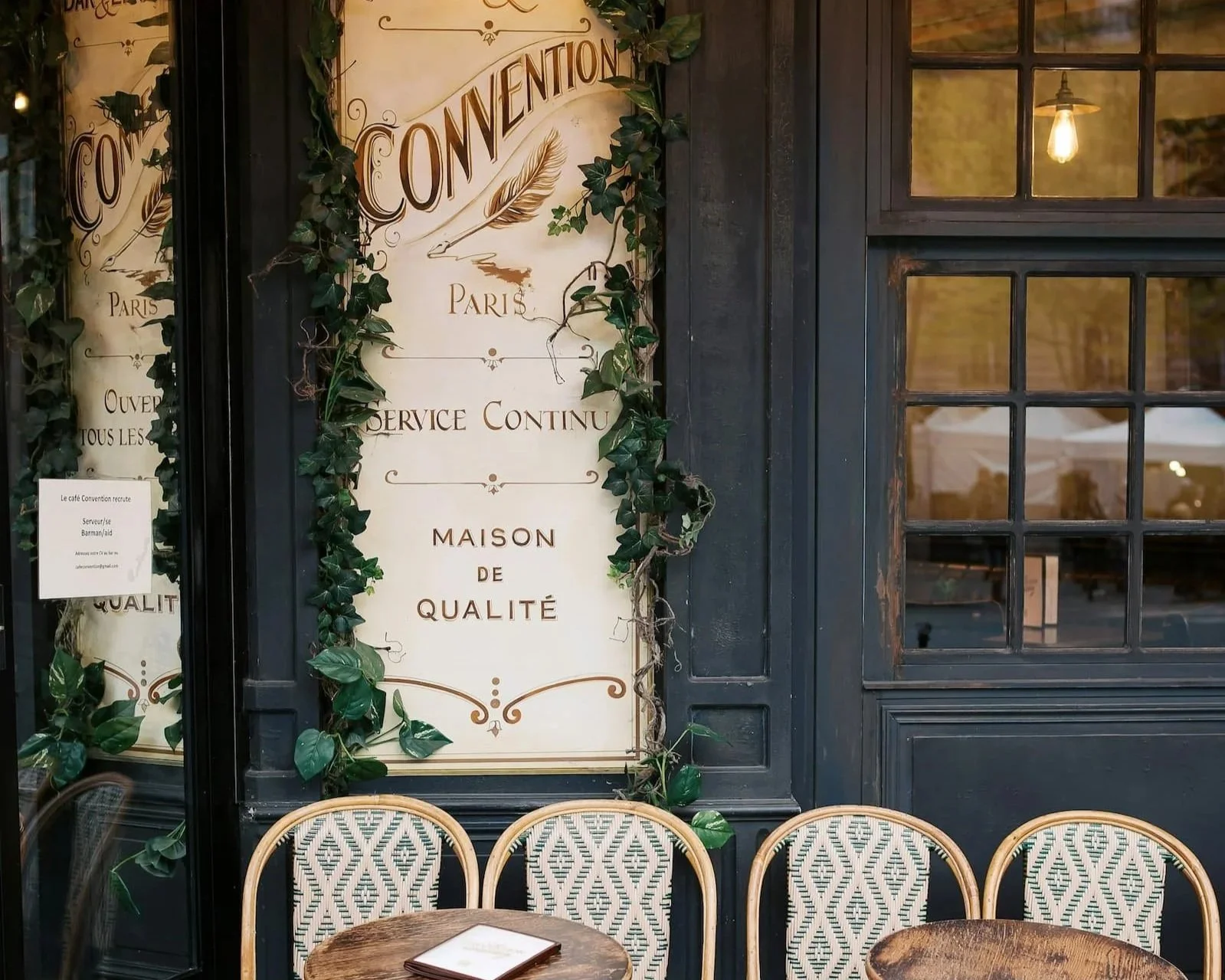
As such, they make up the bulk of service continu restaurants that are ideal for late lunches, early dinners, or meals outside traditional dining hours.
You’ll find brasseries in major cities across France, particularly Paris, Strasbourg, and Marseille.
Café
In France, a café is not just a place to grab coffee.
IT’S MORE LIKE A SOCIAL INSTITUTION.
Cafés serve espresso drinks, wine, beer, and light food like croissants, tartines, salads, and sandwiches.
Many also function as bars as the day goes on.
WHAT SETS CAFÉS APART IS THEIR ROLE IN DAILY LIFE.
People linger over a beverage, they read a book, and they watch people pass by on the sidewalks.
Ordering one coffee and sitting for an hour is completely acceptable.
Cafés are found everywhere in France, from Parisian boulevards to tiny village squares, and they often double as the beating heart of a neighborhood.
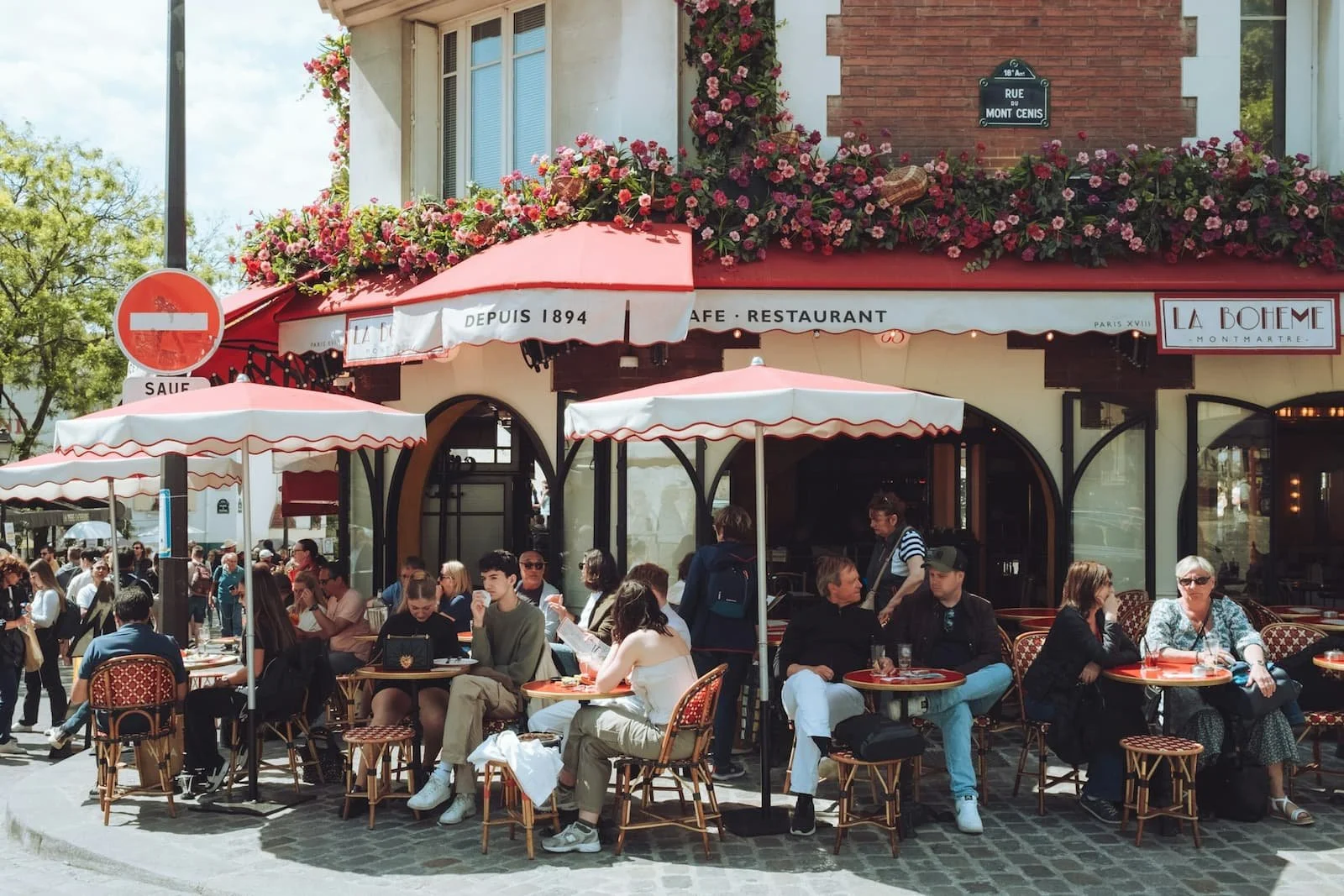
A lively café in Paris, with some patrons enjoying food and drink, while others enjoy people watching or reading.
Other Types of Restaurants in France
Bouchon
A bouchon is a traditional Lyonnais restaurant, born from the city’s working-class history and its long-standing reputation as the culinary capital of France.
Historically, bouchons were frequented by les canuts, Lyon’s silk workers, who needed filling, affordable meals after long days of physical labor.
The food reflects that origin: rich, meat-forward, and unapologetically hearty, the menu of a bouchon is designed to satisfy rather than impress.
Think sausages, pâté en croûte, quenelles in creamy sauce, slow-braised meats, and generous helpings of potatoes or gratins.
WHAT SETS A BOUCHON APART ISN’T REFINEMENT, BUT CONVIVIALITY.
Tables are often close together, menus are short and traditional, and meals unfold at an unhurried pace.
Wine flows freely, conversation is lively, and the atmosphere feels more like a shared celebration than a formal dining experience.
TRUE BOUCHONS ARE ALMOST EXCLUSIVELY FOUND IN LYON, AND THE CITY TAKES THEM SERIOUSLY.
In fact, some establishments carry official Les Bouchons Lyonnais certifications, meant to distinguish authentic bouchons from restaurants simply borrowing the name.
If you’re visiting Lyon, eating at a bouchon isn’t just recommended, it’s essential!
This is the city’s culinary identity on full display, and one of the most culturally authenitc meals you can have anywhere in France.
Restaurant Gastronomique
A RESTAURANT GASTRONOMIQUE REPRESENTS THE PINNACLE OF FRENCH FINE DINING.
Rooted in centuries of culinary tradition and formalized in the 19th and 20th centuries, these restaurants offer up what we now think of as haute cuisine.
They emphasize technical precision, high-quality ingredients, and carefully structured menus, often presented as multi-course tasting experiences.
Sauces are refined, plating is intentional, and service follows a formal rhythm, from synchronized table settings to sommelier-led wine pairings.
MANY RESTAURANTS GASTRONOMIQUES ARE MICHELIN-STARRED, THOUGH NOT ALL PURSUE STARS.
What defines them isn’t the guidebook rating, but a shared pursuit of culinary craft, discipline, and consistency at the highest level.
You’ll find restaurant gastronomique dining in major cities like Paris, as well as in destination regions such as Provence, the Loire Valley, and the French Riviera, where fine dining often intersects with luxury travel.
DINING AT A RESTAURANT GASTRONOMIQUE IS NOT JUST A MEAL, BUT RATHER A DELIBERATE, IMMERSIVE EXPERIENCE.
Expect a longer time commitment for multiple courses, a more formal atmosphere, and a meal designed to be remembered long after dessert.
Cabaret
Cabarets combine dining with live performances, blending music, dance, comedy, or theatrical spectacle into a single evening experience.
WHILE THE PERFORMANCES TAKE CENTER STAGE, FOOD HAS ALWAYS PLAYED AN IMPORTANT SUPPORTING ROLE.
Cabaret culture emerged in late 19th-century Paris, particularly in neighborhoods like Montmartre, where artists, writers, and performers gathered in intimate venues that encouraged both creativity and socializing.
Menus historically leaned toward recognizable French fare rather than experimental cuisine, allowing guests to focus on the entertainment without distraction.
TODAY, CABARETS ARE LESS ABOUT CUTTING-EDGE FOOD AND MORE ABOUT ATMOSPHERE, NOSTALGIA, AND SPECTACLE.
Dining at a cabaret feels intentionally like a dressed-up night out where the meal is part of a larger cultural tradition rather than the main event.
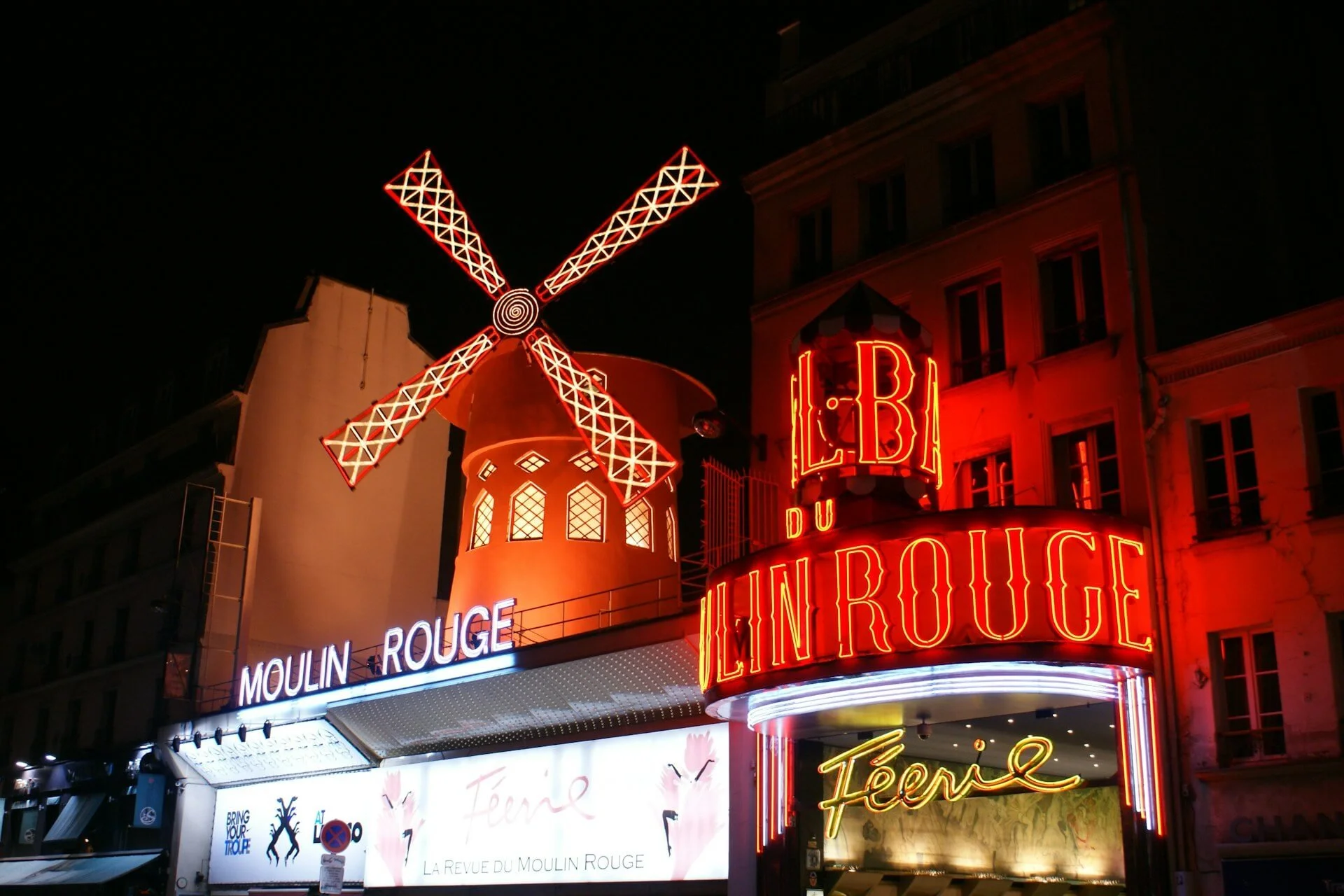
The Moulin Rouge, perhaps the most famous cabaret in Paris.
Auberge
An auberge is a country inn–style restaurant, traditionally offering both meals and simple accommodations for travelers passing through rural areas.
Long before cars and trains made travel faster, auberges were essential stopping points along regional roads, providing rest, warmth, and a solid meal at the end of the day.
FOOD AT AN AUBERGE IS ROOTED IN REGIONAL TRADITION.
Menus are built around local ingredients, time-honored recipes, and comfort food dishes: slow-cooked meats, seasonal vegetables, hearty soups, and rustic desserts.
PORTIONS ARE GENEROUS, AND MEALS ARE MEANT TO BE ENJOYED SLOWLY, OFTEN OVER MULTIPLE COURSES.
The setting is part of the appeal: stone buildings, exposed wooden beams, fireplaces, and dining rooms that feel more like a family home than a restaurant.
Auberges are most commonly found throughout rural France, particularly in regions like Burgundy, Auvergne, and the French Alps.
For travelers, dining at an auberge offers one of the most authentic and grounded food experiences in France.
It’s unpretentious, deeply local, and closely tied to the landscape surrounding it.
Fermes-Auberges
A FERME-AUBERGE IS A MORE SPECIFIC VARIATION OF THE AUBERGE.
These are working farms that serve meals made primarily from ingredients grown or raised on-site, offering an even deeper connection between the terroir and the food on the plate.
Menus are highly seasonal and often fixed, reflecting whatever the farm is producing at that moment.
Ferme-auberges are especially common in Alsace, Provence, and mountainous regions, where agriculture and tourism naturally intersect.

Casual Dining Restaurants in France
Crêperie
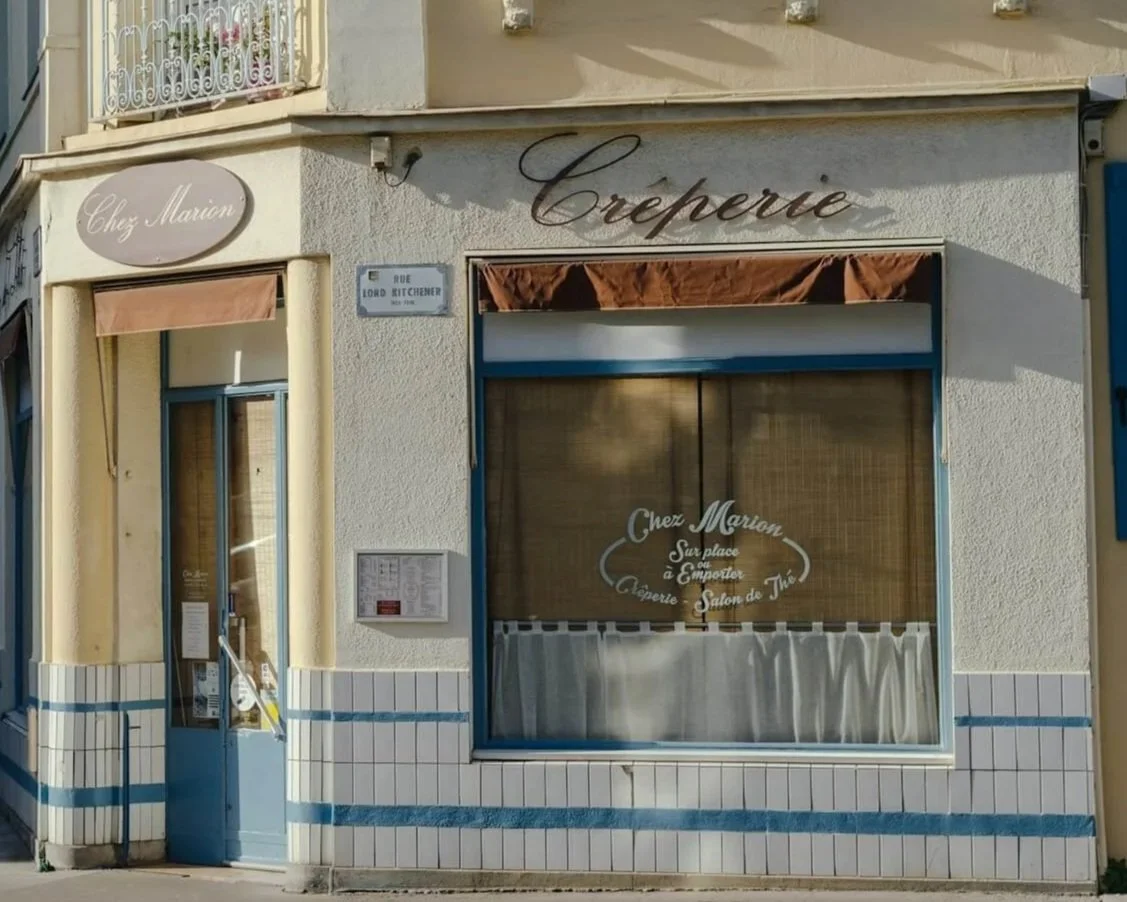
Crêperies specialize in sweet and savory crêpes, including buckwheat galettes filled with cheese, eggs, ham, or mushrooms
Sweet crêpes are often finished with sugar, butter, jam, or chocolate.
CRÊPES ORIGINATE IN BRITTANY, WHERE BUCKWHEAT GROWS WELL IN THE COOLER, COASTAL CLIMATE.
In Brittany, galettes are considered a full meal rather than a snack and are traditionally paired with a glass of local cider.
While deeply tied to Brittany, crêperies are now found all over France, especially in cities and tourist-friendly areas.
THEY’RE CASUAL, AFFORDABLE, AND A RELIABLE OPTION WHEN YOU WANT SOMETHING FILLING BUT INFORMAL.
Guinguette
Guinguettes are outdoor, often riverside restaurants, traditionally associated with music, dancing, wine, and simple meals.
THEY ROSE TO POPULARITY IN THE 19TH CENTURY AS LEISURE SPOTS WHERE CITY DWELLERS COULD ESCAPE URBAN LIFE AND ENJOY FRESH AIR ON WEEKENDS.
Historically, guinguettes lined the rivers around Paris, especially along the Seine and Marne, and became closely tied to summer social life.
Food was intentionally unfussy, with tables featuring grilled meats, fried fish, salads, and carafes of wine meant to be shared.
Today, guinguettes remain a seasonal tradition, most commonly found near rivers in central France and around Paris.
THEY FEEL FESTIVE, RELAXED, AND NOSTALGIC, OFTEN WITH LIVE MUSIC OR DANCING IN THE EVENINGS.
For travelers, dining at a guinguette is less about culinary excellence and more about enjoying the warm-weather atmosphere.
Rôtisserie
A rôtisserie focuses on rotisserie-roasted meats, most notably chicken, slowly turning on spits until the skin is crisp and the meat stays juicy.
RÔTISSERIES GREW OUT OF FRANCE’S STRONG TRADITION OF TAKEAWAY MEALS FOR EVERYDAY LIFE.
Many are designed primarily for takeout, though some offer a few casual tables for quick meals.
Sides are simple and comforting: roasted potatoes, vegetables, or salads.
You’ll find rôtisseries throughout France, especially in neighborhoods and smaller towns, where they serve as a dependable option for an easy, affordable dinner.
Relais Routier
Relais routiers are roadside restaurants catering to truck drivers and long-distance travelers.
THE FOOD IS HEARTY, PORTIONS ARE LARGE, PRICES ARE REASONABLE, AND DÉCOR IS MINIMAL.
You’ll mostly encounter them along highways and in rural transit corridors.
While not a destination dining experience, they’re a fascinating window into everyday French food culture.
Marché Gourmand
A marché gourmand is a market-based dining experience where vendors prepare simple, seasonal dishes using ingredients sold at the market itself.
UNLIKE A TRADITIONAL RESTAURANT, THIS IS INFORMAL AND OFTEN COMMUNAL, AS YOU ORDER FROM INDIVIDUAL STALLS AND EAT AT SHARED TABLES OR NEARBY SEATING.
Marchés gourmands are especially common in food-forward regions like Provence, the Dordogne, and southwestern France, where markets are a cornerstone of daily life.
The focus is on freshness and regional specialties: oysters, cheese plates, rotisserie chicken, and local wine are typical offerings.
For travelers, this is a casual, affordable way to eat like a local, without the formality or time commitment of a sit-down restaurant.

Spots for Sweets, Coffee & Tea in France
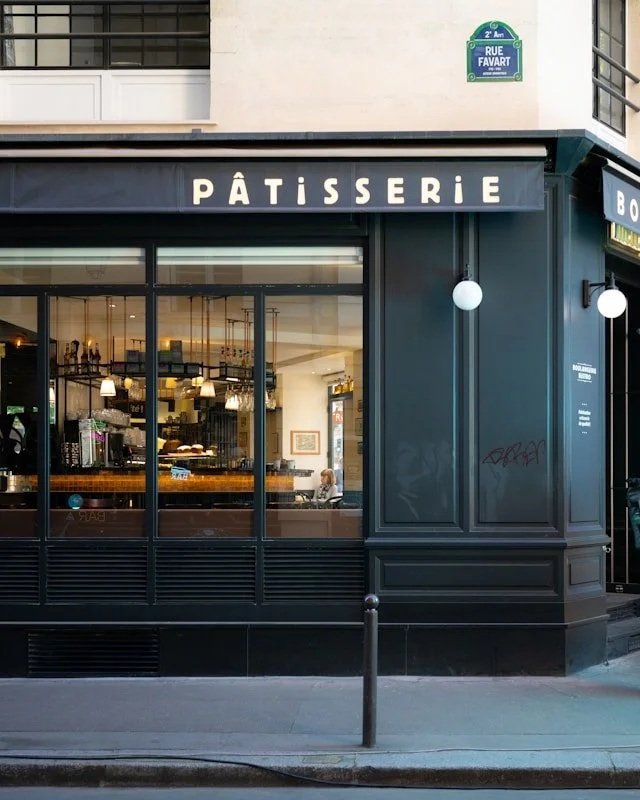
Pâtisserie
A pâtisserie is a bakery specializing in French pastries and desserts, from éclairs and fruit tarts to mille-feuille, religieuses, and macarons.
Pastry-making in France is a highly respected craft, governed by formal training and long apprenticeships, and many pâtissiers treat their work with the same seriousness as fine art.
PÂTISSERIES ARE FOUND ALL OVER FRANCE, ESPECIALLY IN CITIES, AND NEARLY EVERY REGION HAS ITS OWN SPECIALTIES.
Paris is known for refined, technique-driven pastries, while regions like Alsace favor richer, German-influenced desserts, and Provence leans into fruit-forward tarts and lighter sweets.
For locals, stopping at the pâtisserie is often a daily or weekly ritual, whether to pick up dessert after dinner or enjoy a pastry with coffee.
Salon de Thé
A SALON DE THÉ IS A TEA ROOM, TYPICALLY MORE REFINED AND TRANQUIL THAN A CAFÉ.
Historically, salons de thé became popular in the 19th and early 20th centuries as socially acceptable spaces for women to gather, especially during daytime hours when cafés were more male-dominated.
They serve tea, coffee, pastries, and sometimes light lunches, often presented more formally than in a café setting.
THE ATMOSPHERE IS CALM AND ELEGANT, DESIGNED FOR LINGERING CONVERSATIONS, QUIET READING, OR AN UNHURRIED AFTERNOON BREAK.
Salons de thé are most common in larger cities, particularly Paris, where they remain a favorite for refined midday pauses and special-occasion treats.
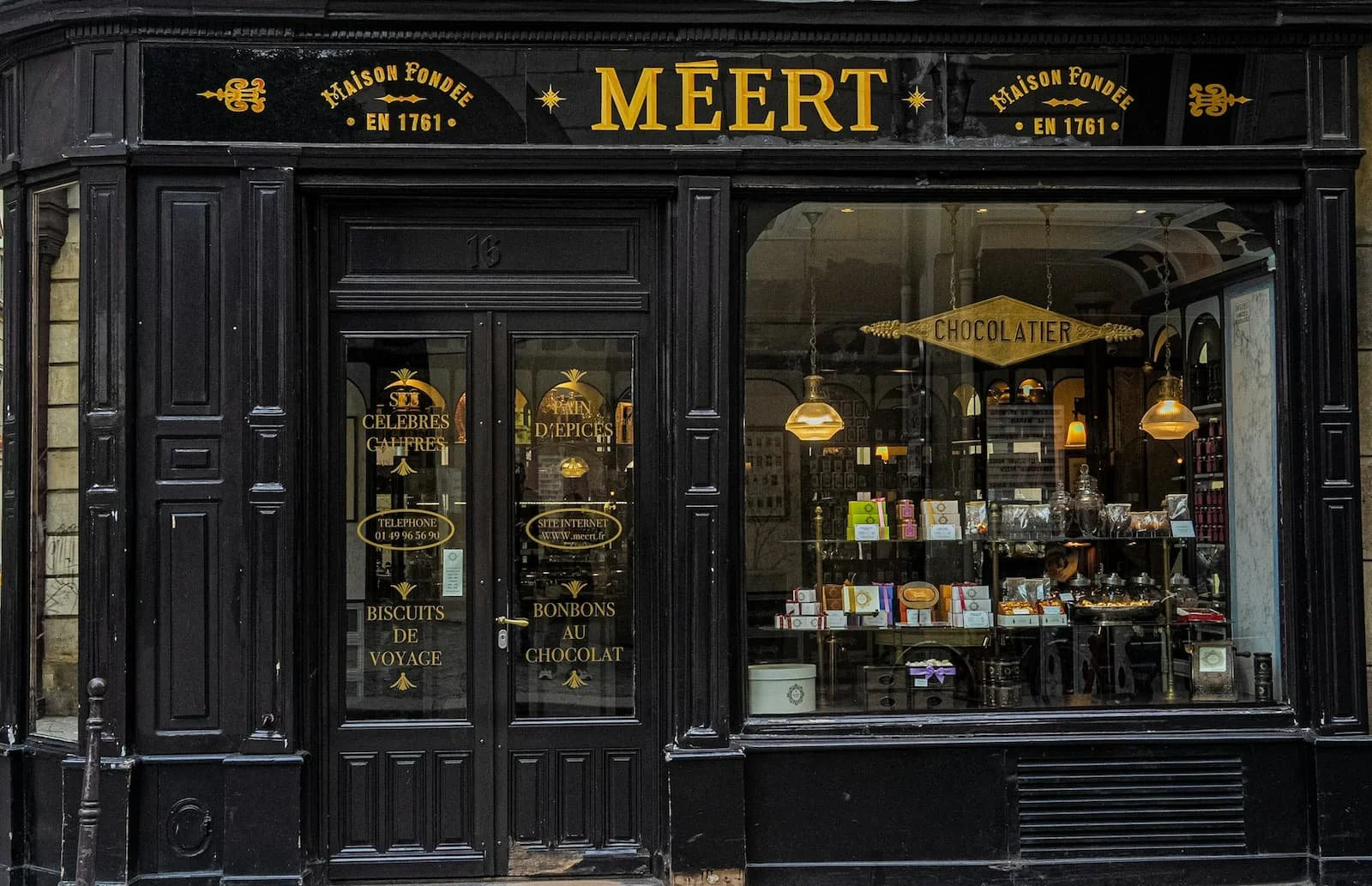
Chocolaterie
Chocolateries focus on artisan chocolate, offering handcrafted bonbons, pralines, truffles, and thick, luxurious hot chocolate.
CHOCOLATE HAS A LONG HISTORY IN FRANCE, ARRIVING VIA ROYAL COURTS IN THE 17TH CENTURY BEFORE BECOMING A WIDELY CELEBRATED TREAT.
Many chocolateries emphasize single-origin cacao, precise tempering, and distinctive flavor pairings, treating chocolate with the same care as fine wine.
These shops are especially popular in cities like Paris and Lyon, where competition pushes quality exceptionally high.
Some chocolateries blur the line between shop and café, offering seating for hot chocolate or dessert plates, making them an indulgent stop during colder months or rainy afternoons.
Brûlerie
A BRÛLERIE SPECIALIZES IN FRESHLY ROASTED COFFEE, OFTEN ROASTING BEANS ON-SITE OR IN SMALL BATCHES.
While France has long been associated with cafés rather than specialty coffee, brûleries represent a more modern shift toward coffee craftsmanship.
These spaces appeal to serious coffee drinkers looking for higher-quality beans, alternative brewing methods, and a quieter, more focused atmosphere than a traditional café.
PASTRIES ARE OFTEN OFFERED, BUT COFFEE IS THE CLEAR STAR.
Brûleries are increasingly common in larger cities, particularly in Paris and other urban centers, reflecting France’s evolving coffee culture and growing appreciation for specialty roasting.

Conclusion
If you’ve made it this far, then I’ll bet that your mouth is watering. 😆
After reading this list, you’ll never be confused by French restaurant types again!
THESE DESIGNATIONS AREN’T JUST DECORATIVE. THEY SIGNAL PRICE, PACE, FORMALITY, AND EXPECTATION.
One important caveat: modern restaurants sometimes borrow traditional names without fully following the conventions behind them.
This is why you’ll find so many fancy-ish bistros in the States.
BUT MORE OFTEN THAN NOT, THESE CATEGORIES STILL HOLD TRUE.
I hope you’ll come back to this list whenever you’re planning a meal in France, whether you’re deciding between a bistro and a brasserie in Paris, or seeking out a regional specialty in the countryside.
Until next time,
xx
Angela
YOU’LL ALSO LOVE…