


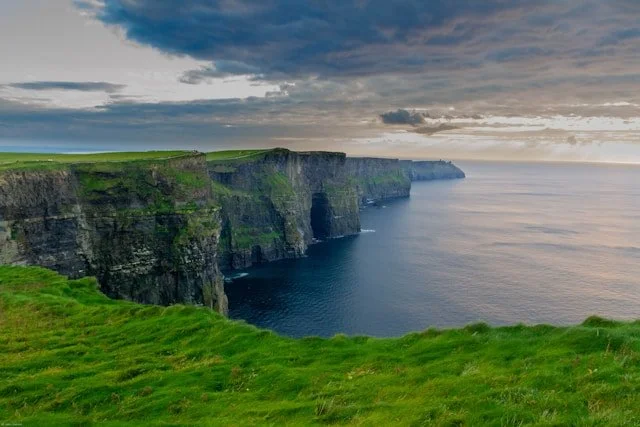
Ireland Travel Guide
Ireland is a country where dramatic landscapes and warm hospitality meet. Rolling green hills, rugged coastlines, and lively cities like Dublin and Galway offer natural beauty with a side of cultural depth. Its ancient castles, live music, and oral storytelling tradition offer visitor’s a glimpse into the country’s vivid and vibrant history.
This travel guide covers the essentials for planning your trip to Ireland, including what to expect, how to get around, and the best experiences to add to your itinerary.


What to Expect in Ireland
Weather
Ireland has a maritime climate with four distinct seasons.
Summers are mild, averaging 60–68°F (16–20°C), though warmer days in the low 70s°F (21–23°C) are common. Weather can change quickly, with sunshine, showers, and clouds often appearing on the same day. Coastal areas tend to be windier, while the west coast sees more rainfall than the east.
Winters are cool and damp, typically ranging from 40–48°F (4–9°C), with frequent rain and occasional frost. Snow is rare outside higher elevations.
Best Time to Visit
Late spring (May to June) and early autumn (September) are often considered the best times to visit Ireland, offering long daylight hours, comfortable temperatures, and lush green landscapes.
Summer is peak season, especially in Dublin, the Wild Atlantic Way, and popular towns like Killarney and Galway. Winter is quieter, though rural travel can be more limited due to weather.
Language
English is the primary language spoken in Ireland, though the country’s first official language is Irish Gaelic. Gaelic is used in signage and daily life in Gaeltacht regions, mainly in the west. Learning a few simple Irish phrases is certainly appreciated by locals, but not necessary for communication.
Currency
Ireland uses the euro (€). Credit and debit cards are widely accepted, and contactless payments are standard in shops, restaurants, and public transport. Carrying a small amount of cash can be helpful in rural areas, local pubs, and small markets, with ATMs easy to find in cities and towns.
Getting There
Ireland is well connected by air and sea. Dublin Airport is the main international gateway with extensive global routes, while Shannon, Cork, and Belfast airports offer additional European connections.
Travelers from the United Kingdom and continental Europe can also arrive by ferry, with services linking Ireland to ports in Wales, Scotland, England, and France. Once in the country, trains, buses, and domestic flights provide access to major regions, though renting a car is often the most flexible way to explore rural areas and coastal routes.
How to Get Around Ireland

Train

Rental Car

Private Transfer

Ferry

Bus
Top Experiences in Ireland
LATEST POSTS ABOUT IRELAND
WHAT TO PACK FOR IRELAND
Ireland FAQ
-
Plan 7 to 10 days to see the main highlights. A week works for Dublin and one region, such as Galway or Killarney. With more time, you can add Northern Ireland or the Wild Atlantic Way.
-
A rental car offers the most flexibility for rural areas and coastal routes. Trains and buses work well between major cities, but service is limited in the countryside. Renting a car in Dublin is not recommended due to traffic and parking.
-
In Ireland, driving is on the left side of the road, with right-hand steering. Most visitors accustomed to driving on the right adjust quickly by taking it slow and getting comfortable outside major cities before longer drives.
“There are no strangers here; only friends you haven't yet met.“
William Butler Yeats